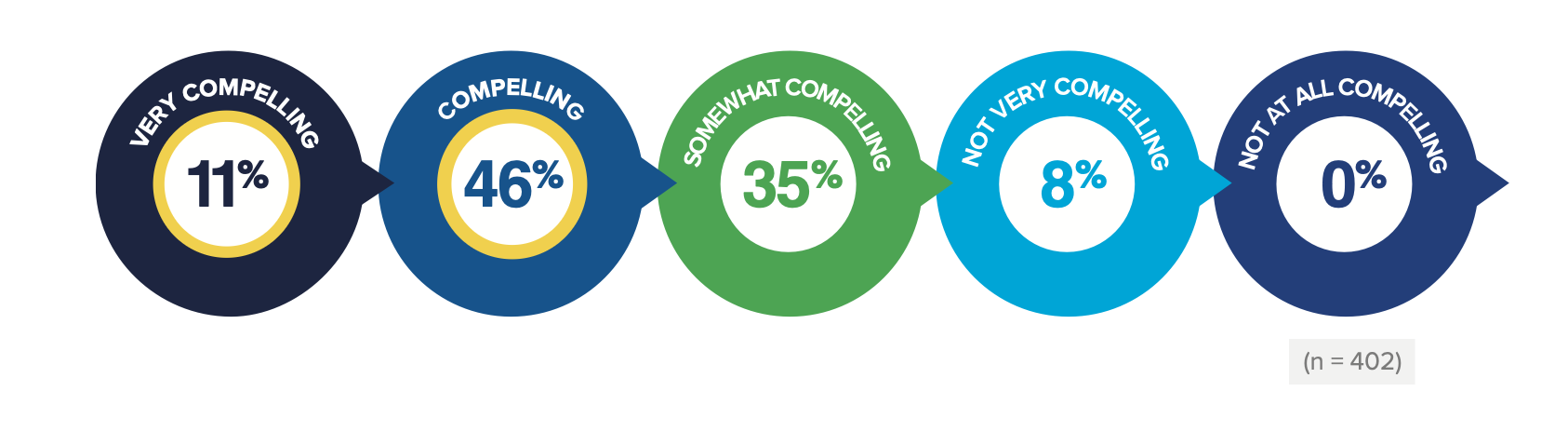
I was recently on a roundtable call focused on association member value propositions. The facilitator shared a stat from the 2025 edition of Marketing General’s annual Membership Marketing Benchmarking Report:
“This year’s data reveal that only 11% of respondents believe their association offers a very compelling value proposition…”
Roundtable participants were universally not surprised to hear this, and most on the call agreed that their association’s MVP did not qualify as “very compelling.”
How does your association move from a “nice to have” to a “need to have”?
The “what’s in it for me?” focus is not new, but members’ consumer experiences have trained them to expect value that is targeted to them, not in an old-school general category way (mid-career professional, Asian man, resident of the Midwest, etc.), but personally, and we talked about the fact that we still struggle to connect any given member with the 2-3 things from our extensive lists of benefits that will help her achieve the goal or solve the problem that made her want to associate in the first place.
Associations tout education, networking, and advocacy as our main benefits.
But, no matter the profession or industry your association serves, CEUs are widely available these days. So is information, and even if it’s not, per Answer Engines (aka the AI summaries that appear at the top of the page every time you search something online), as good as what your association provides, in many cases, for many people, it’s good enough. While advocacy can be a strong driver of membership, it also inherently has a strong free rider problem (the association will keep doing this whether I personally pay in or not, so the fiscally responsible move may be to “free ride”).
That leaves community. One participant had gone through an exercise with her volunteer leaders that she was about to expand to her full membership, designed to get them talking about community and what engages them from their personal lives. Because the thing is, no one has to market your book club or synagogue or bocce league to you, or put you through the hard sell to get you to participate. These things are inherently engaging.
The question for associations remains: “How will my life change for the better if I choose to join your association?”
If you don’t have a good answer to that, you’re in the 89%, and that is not a place you want to be.
Image credit: Marketing General, The 2025 Membership Marketing Benchmarking Report, pg. 6